Showing posts with label Science. Show all posts

Friday, September 25, 2015

$25 Ebola Test: Science Win for 16 year old

Olivia Hallisey.16 yrs, from Greenwich Connecticut won the Google Science Fair. Her invention: a test for Ebola in 30 mins,  even in patients not displaying symptoms . The test cost just $25 and does not need refrigeration.  Previous tests took up to 12 hours and cost a few thousand dollars.

Other finalists for the fair included Pranav Sivakumar, 15, from Aurora, Illinois, who devised an automated method for discovering and analyzing gravitationally-lensed quasars; 14-year-old Krtin Nithiyanandam from Surrey, England, who designed a test for detecting Alzheimer's in its early stages (there was also another test by Anika Cheerala, 13 USA) ; Lalita Prasida Sripada Srisai, 13, from India, who found a way to make waste water clean by filtering it through corn cobs; and a French 14-year-old, Eliott Sarrey, who built a robot capable of tending to gardens.

For Sri Lanka, Lalita Srisai's project of cleaning waste water using Corn Cobs is probably very useful.  Very, very cool.  Plenty of corn cob (බඩ ඉරිඟු) in SL.


Adriel Sumathipla, 16 USA (sounds like he is of Sri Lankan descent) was a global finalist with his  Multi-Biomarker Diagnostic for Cardiac Disease:Rapid. Portable. Ultra-Low Cost.

Note: South Asians seem over represented among finalists and specially the winners.

https://www.googlesciencefair.com/en/ http://www.dailymail.co.uk/femail/article-3246820/Clever-16-year-old-girl-sweeps-Google-Science-Fair-cheap-fast-temperature-independent-test-deadly-Ebola-virus.html

Sunday, March 30, 2014

Chronic Kidney Disease: Cause Hard Water + Heavy Metals + RoundUp

A research article by Jayasumana et al (2014) proposes the cause for Chronic Kidney Disease  of Unknown etiology (CKDu) are chemical complexes formed by Glycphosate (RoundUp) when it combines with  hard water and heavy metals in fertilizer.
I would not rule out dioxins as a another contributory cause to CKDu.


Bullet points from the article.
Prevalence  15% [2] affecting a total population of 400,000 patients with an estimated death toll of around 20,000 
Individuals who drink treated water from large water supply schemes (especially in the twocities of Anuradhapura and Polonnaruwa), while living in the same endemic areas, do not have the disease.
Jaffna and Northern province which has very hard water (Fig 1) has low incidence of CKDu because agro chemicals were prohibited during the war.
Three potential sources of glyphosate/AMPA-metal complexes:


  • [Glyphosate/AMPA + Ca/Mg/Fe/Sr ] complex in drinking water.
  • [Glyphosate/AMPA + Cd/Cr/Ni/Co/Pb/Vanadium (V) or As] complex in food.
  • [Glyphosate/AMPA coming from dermal/ respiratory route] + low amount of [metals/As] from water and foods, here the complex is formed within circulation.
  • I can well attest to the heavy usage of RoundUp out here in the Wanathavillu/Eluvamkulam area.  RoundUp is used to clear paddy fields, vegetable plots, road side, gardens of weeds.  Its much cheaper than using manual labor.  That said as far as I know there arnt any patients suffering from CKDu.  Probably attributable to drinking water wells are by the side of tanks/wewas like Ralmadu and Nelum Wewa or are diluted by Kala Oya waters.  All other wells the water is absolutely hard and undrinkable.

    Update:
    Research shows that Roundup (glyphosate) and its principal breakdown product, Aminomethylphosponic acid (AMPA) is taken up and accumulated in GM soy bean.
    All of the individual samples of GM-soy contained residues of both glyphosate and AMPA, on average 9.0 mg/kg. This amount is greater than is typical for many vitamins. In contrast, no sample from the conventional or the organic soybeans showed residues of these chemicals .

    Full Article
    Jayasumana, C.; Gunatilake, S.; Senanayake, P. Glyphosate, Hard Water and Nephrotoxic Metals: Are They the Culprits Behind the Epidemic of Chronic Kidney Disease of Unknown Etiology in Sri Lanka? Int. J. Environ. Res. Public Health 2014, 11, 2125-2147.

    via:
    http://www.nakedcapitalism.com/2014/03/links-3314.html

    Thursday, December 5, 2013

    Software Glitch: 28 Deaths

    This post is to emphasize that understanding rounding errors are paramount in writing code. In older versions of Excel and on older versions of programming languages if you did the following in two steps 10/ 3 x 3 you would get 9.999.  Modern compilers have apparently fixed most such issues.

    On 25 February 1991, an Iraqi Scud hit the barracks in Dhahran, Saudi Arabia, killing 28 soldiers from the U.S. Army.
    A government investigation revealed that the failed intercept at Dhahran had been caused by a software error in the system's clock. The Patriot missile battery at Dhahran had been in operation for 100 hours, by which time the system's internal clock had drifted by one third of a second. Due to the closure speed of the interceptor and the target, this resulted in a miss distance of 600 meters.
    The radar system had successfully detected the Scud and predicted where to look for it next, but because of the time error, looked in the wrong part of the sky and found no missile. With no missile, the initial detection was assumed to be a spurious track and the missile was removed from the system. No interception was attempted, and the missile impacted on a makeshift barracks in an Al Khobar warehouse, killing 28 soldiers.
    At the time, the Israelis had already identified the problem and informed the US Army and the PATRIOT Project Office (the software manufacturer) on 11 February 1991, but no upgrade was present at the time.
    As a stopgap measure, the Israelis recommended rebooting the system's computers regularly. However, Army officials did not understand how often they needed to do so. The manufacturer supplied updated software to the Army on 26 February, the day after the Scud struck the Army barracks.
    http://en.wikipedia.org/wiki/MIM-104_Patriot#Failure_at_Dhahran

    For more in depth on Rounding Errors see
    http://docs.oracle.com/cd/E19957-01/806-3568/ncg_goldberg.html

    Wednesday, March 20, 2013

    Increased Monsoon Rainfall

    Monsoons are having higher rainfall and also the possibility of monsoon failure. This is a big deal as we found out last December with flooding all over the country. Our water management needs to take into account even greater rainfall rates. That is expect more rain to fall in shorter time periods but also expect possibility of extended drought.  The one saving grace for Sri Lanka is that we can still have Island Effect rainfall even when the monsoons fail in other parts of the world such as India.
    Natural swings in the climate have significantly intensified Northern Hemisphere monsoon rainfall, showing that these swings must be taken into account for climate predictions in the coming decades, a new study finds.
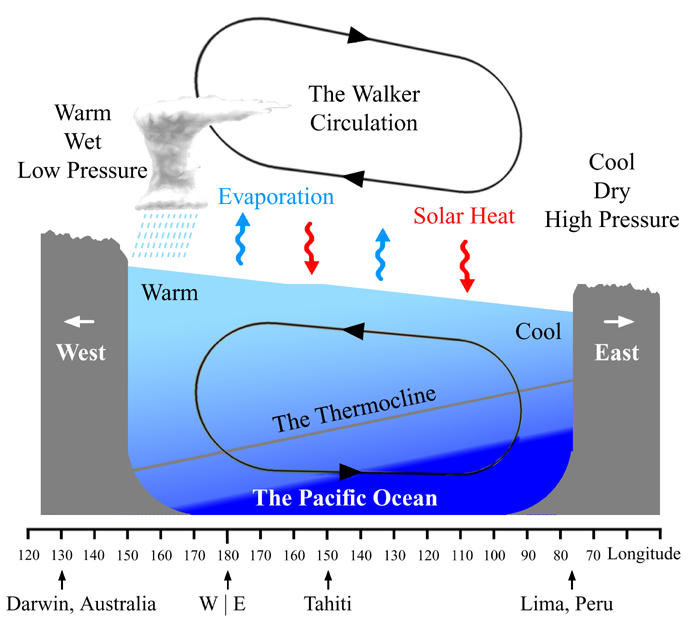
    Wang and his colleagues, however, found that over the past 30 years, the summer monsoon circulation, as well as the Hadley and Walker circulations, have all substantially intensified. This intensification has resulted in significantly greater global summer monsoon rainfall in the Northern Hemisphere than predicted from greenhouse-gas-induced warming alone: namely a 9.5% increase, compared to the anthropogenic predicted contribution of 2.6% per degree of global warming.

    Most of the recent intensification is attributable to a cooling of the eastern Pacific that began in 1998. This cooling is the result of natural long-term swings in ocean surface temperatures, particularly swings in the Interdecadal Pacific Oscillation or mega-El Niño-Southern Oscillation, which has lately been in a mega-La Niña or cool phase. Another natural climate swing, called the Atlantic Multidecadal Oscillation, also contributes to the intensification of monsoon rainfall.

    Other Research finds that Global warming could cause frequent and severe failures of the Indian summer monsoon in the next two centuries, new research suggests.
    They found that as we move towards the end of the 21st, and into the 22nd, century, increasing temperatures and a change in strength of the Pacific Walker circulation in spring could cause more frequent and severe changes in monsoon rainfall.

    These failures of the monsoon system -- defined in the study as a 40 to 70 per cent reduction in rainfall below normal levels -- were unprecedented in the researchers' observational record, which was taken from the India Meteorological Department and goes back to the 1870s.

    from
    http://www.sciencedaily.com/releases/2013/03/130320155251.htm
    http://www.sciencedaily.com/releases/2012/11/121105200054.htm

    Friday, April 13, 2012

    Porn Bigger Than CNN

    Sunny Leone Indian Porn Star
    Apparently
    Xvideos, the largest porn site on the web with 4.4 billion page views per month, is three times the size of CNN or ESPN, and twice the size of Reddit. LiveJasmin isn’t much smaller. YouPorn, Tube8, and Pornhub — they’re all vast, vast sites that dwarf almost everything except the Googles and Facebooks of the internet.

    Four billion page views sure sounds like a lot, but it’s only when you factor in what those porn surfers are actually doing that the size and scale of adult websites truly comes into focus.

    For a news site like Engadget or ExtremeTech, an average visit is usually between three and six minutes; enough time to read one or two stories. The average time spent on a porn site, however, is between 15 and 20 minutes.

    To put that 800Gbps figure into perspective, the internet only handles around half an exabyte of traffic every day, which equates to around 50Tbps — in other words, a single porn site accounts for almost 2% of the internet’s total traffic.


    Via Naked Capitalism to how big are porn sites

    Friday, February 17, 2012

    NY Times: How Statistics help Companies Learn Your Secrets (and also how to break habits)

    The NY Times has an article out called How Companies Learn Your Secrets. I found this an interesting article in many ways.
    a) It could provide career guidance to young students (more math and statistics cant hurt).
    b) How global info glut is making statistics more relevant
    b) Show how habits are formed and how habits can be broken

    Anyway here are the excerpts:
    Almost every major retailer, from grocery chains to investment banks to the U.S. Postal Service, has a “predictive analytics” department devoted to understanding not just consumers’ shopping habits but also their personal habits, so as to more efficiently market to them. “But Target has always been one of the smartest at this,” says Eric Siegel, a consultant and the chairman of a conference called Predictive Analytics World.

    As the ability to analyze data has grown more and more fine-grained, the push to understand how daily habits influence our decisions has become one of the most exciting topics in clinical research, even though most of us are hardly aware those patterns exist. One study from Duke University estimated that habits, rather than conscious decision-making, shape 45 percent of the choices we make every day, and recent discoveries have begun to change everything from the way we think about dieting to how doctors conceive treatments for anxiety, depression and addictions.

    The process within our brains that creates habits is a three-step loop. First, there is a cue, a trigger that tells your brain to go into automatic mode and which habit to use. Then there is the routine, which can be physical or mental or emotional. Finally, there is a reward, which helps your brain figure out if this particular loop is worth remembering for the future. Over time, this loop — cue, routine, reward; cue, routine, reward — becomes more and more automatic. The cue and reward become neurologically intertwined until a sense of craving emerges.

    Habits aren’t destiny — they can be ignored, changed or replaced. But it’s also true that once the loop is established and a habit emerges, your brain stops fully participating in decision-making. So unless you deliberately fight a habit — unless you find new cues and rewards — the old pattern will unfold automatically.

    But when some customers were going through a major life event, like graduating from college or getting a new job or moving to a new town, their shopping habits became flexible in ways that were both predictable and potential gold mines for retailers. The study found that when someone marries, he or she is more likely to start buying a new type of coffee. When a couple move into a new house, they’re more apt to purchase a different kind of cereal. When they divorce, there’s an increased chance they’ll start buying different brands of beer.

    Consumers going through major life events often don’t notice, or care, that their shopping habits have shifted, but retailers notice, and they care quite a bit. At those unique moments, Andreasen wrote, customers are “vulnerable to intervention by marketers.” In other words, a precisely timed advertisement, sent to a recent divorcee or new homebuyer, can change someone’s shopping patterns for years.
    And among life events, none are more important than the arrival of a baby. At that moment, new parents’ habits are more flexible than at almost any other time in their adult lives. If companies can identify pregnant shoppers, they can earn millions.
    As Pole’s computers crawled through the data, he was able to identify about 25 products that, when analyzed together, allowed him to assign each shopper a “pregnancy prediction” score. More important, he could also estimate her due date to within a small window, so Target could send coupons timed to very specific stages of her pregnancy. One Target employee I spoke to provided a hypothetical example. Take a fictional Target shopper named Jenny Ward, who is 23, lives in Atlanta and in March bought cocoa-butter lotion, a purse large enough to double as a diaper bag, zinc and magnesium supplements and a bright blue rug. There’s, say, an 87 percent chance that she’s pregnant and that her delivery date is sometime in late August.
    I had got into a bad habit of going to the cafeteria every afternoon and eating a chocolate-chip cookie, which contributed to my gaining a few pounds. Eight, to be precise.
    The first step, they said, was to figure out my habit loop. The routine was simple: every afternoon, I walked to the cafeteria, bought a cookie and ate it while chatting with friends.
    Next came some less obvious questions: What was the cue? Hunger? Boredom? Low blood sugar? And what was the reward? The taste of the cookie itself? The temporary distraction from my work? The chance to socialize with colleagues?
    Rewards are powerful because they satisfy cravings, but we’re often not conscious of the urges driving our habits in the first place. So one day, when I felt a cookie impulse, I went outside and took a walk instead. The next day, I went to the cafeteria and bought a coffee. The next, I bought an apple and ate it while chatting with friends. You get the idea. I wanted to test different theories regarding what reward I was really craving. Was it hunger? (In which case the apple should have worked.) Was it the desire for a quick burst of energy? (If so, the coffee should suffice.) Or, as turned out to be the answer, was it that after several hours spent focused on work, I wanted to socialize, to make sure I was up to speed on office gossip, and the cookie was just a convenient excuse? When I walked to a colleague’s desk and chatted for a few minutes, it turned out, my cookie urge was gone.