Showing posts with label Agriculture. Show all posts

Sunday, November 1, 2015

For Domestic Agriculture Protection

Just a few hours ago Jack Point had an article against Tariffs that protect the local farmer.  One of the arguments he uses are the Corn Laws of 1840''s that protected aristocrat large landowners in the UK.

For a start there is no comparison because Corn Laws were protective for large aristocrat landowners in UK, whereas most agricultural land in Sri Lanka are small holdings of about 2-3 acres (except Tea/Rubber). 
 Note: Sri Lanka has one of the highest population densities  #43, (309/km2, 800/km2), and one of the lowest rates of urbanization with a 15% urban population # 191 out of 198

The other is that Jack Point is probably unaware of the history prior to the creation and repeal of Corn Laws.

In point form,
  • Law (Enclosure Acts  (also here) 1750-1860) pushed rural poor out of countryside.
  • Cheap Labor for factories. (Think life described by Dickens and Thomas Hardy)
  • Oligarch/aristocrat consolidate land.
  • Oligarch/aristocrats Pass laws (Corn Laws) to get higher prices for their products.
  • Laws to keep Factory Wage Slaves in check.
  • By time the laws were repealed the damage was done. It was near impossible for one time rural poor, now factory wage slaves to move back into and buy property in the villages. 
  • To Quote
    The lands seized by the acts were then consolidated into individual and privately owned farms, with large, politically connected farmers receiving the best land. Often, small landowners could not afford the legal and other associated costs of enclosure and so were forced out
Win win situation for the Oligarach/aristocrat/Factory Owner.
Similar laws were enacted in the US too to ensure urbanization and cheap factory workers.

All that Free Market stuff is bullshit.

In Sri Lanka, most land holdings are small holders 2-3 acres. When you see large acres  of paddy land it does not belong to a single owner.  There would be many owners in this paddy tract, Also agricutural workers are not just 24% of population.  Many Govt workers, police officers/constables, private sector employees in cities towns except for Kandy/Colombo  have an acre or two, typically paddy land in their ancestral villages.  They would not be classified as agricultural worker, even though they take leave and go and work on planting and harvesting.

Yes, rice and other agricultural produce is cheaper from India Pakistan and Bangaladesh.  And produce imported is taxed for revenue and hopefully protect agriculture in Sri Lanka.

At least one of the reasons for  cheap agricultural produce from India Pakistan and Bangaladesh is because large land holdings with dirt cheap labor in those countries. 

Do we want Sri Lankas small holder farmers to live a life of poverty like in India/Pakistan/Bangaladesh.
Do we want small holder farmers to flock to cities and become wage slaves.


What was said in England should also be applicable in Sri Lanka

Every cottage shall have his porcyon [portion, ie plot of land] assigned to him according to his rent, and then shall not the riche man oppress the poore man with his catell, and every man shall eate his owne close at his pleasure.

Wednesday, November 5, 2014

Using Palmyra (තල්) as an Elephant Deterrent


Palmyra (තල්) as an Elephant Deterrent

 Mr. S. M. A. Azeez is former Deputy Director of Agriculture. He has been promoting the use of Palmyra trees as an Elephant deterrent for many years.

You can contact Mr. Azeez at 077-348-7114 for further details on how the trees should be planted etc.

Photos are of the model plantation with Palmyra as an Elephant Deterrent.


Wednesday, October 15, 2014

Liberia, Ebola, Firestone and a Rubber Farm

Liberia and Ebola is in the News. A Rubber Farm (Estate for us Sri Lankans) leased by Firestone is also in the news  as one of the few places where Ebola has been stopped from spreading.

What the articles dont mention about the Rubber Farm is that it is a million acres (4% of the land in Liberia), and in 2005 the lease was renewed for 37 years at USD 0.50 cents/acre.   I could not find out if the 0.50 was for a year, or for the 37 years.

Over here in Sri Lanka an acre of Rubber is over USD 10,000 (LKR Million).  So for the price of one acre of Rubber in Sri Lanka one can lease 540 acres for 37 years.   Talk about exploitation of Africa.

Note: Firestone is currently owned by Bridgestone which is Japanese.

Some Facts of Liberia and the Rubber Farm
  • In 1820, the American Colonization Society (ACS) establishes colony of African Americans with tradition infused with American notions of racial supremacy, and political republicanism.

  • 1847 Independent Republic of Liberia created. The leadership of the new nation consisted largely of the Americo-Liberians.

  • Supported by prominent American politicians such as Abraham Lincoln, Henry Clay, and James Monroe, believed repatriation was preferable to freeing of slaves.

  • Indigenous Africans were excluded from citizenship until 1904.

  • 1926, the Liberian government granted Firestone a 99-year lease for a million acres (to be chosen by the company wherever in Liberia) at a price of 6 cents per acre.  Thats 4% of the countrys 27,520,000 acres.

  • Firestone also provided a $5 million loan at a 7% interest rate.

  • The loan was given in exchange for complete authority over the government's revenues until the loan was paid.

  • The loan took a larger and larger portion of the Liberian government's incomes: it grew from 20% of the total revenue of Liberia in 1929, to 32% in 1930, to 54.9% in 1931 and nearly the whole revenue in 1932.

  • In 2005, the Firestone Company and the Liberian government signed a new 37-year deal raising the lease to 50 cents per acre .
http://online.wsj.com/articles/liberian-rubber-farm-becomes-sanctuary-against-ebola-1412629331
http://en.wikipedia.org/wiki/Firestone_Natural_Rubber_Company

Saturday, May 10, 2014

Elephant Incursion

Coconut Palm leaves broken by Elephant
We (Wilpattu House) had an elephant coming into the property on 8th May 2014.  This was regardless of the Elephant deterrent 6 foot deep ditch around the place.  This smart elephant broke the earth on the ditch to make it less steep and managed to climb over to the property.  Luckily not much harm was done other than breaking two coconut palm leaves.  The watcher/caretaker was awakened and had lit a couple of crackers.  I dont think this Elephant was scared away, he just wishes to avoid confrontation.

This elephant, who nobody has really seen, much less photographed is a really large animal with a footprint of   1.5 feet (457 mm).  I guess old too, older than the New Eluvamkulam town.  New Eluvamkulam town was established in the 90's when the old village moved to the South of the Army and Navy points to avoid LTTE attacks.
The Elephants Foot print 1.5 feet across

This big old elephant probably lives in the replanted jungle of the Holcim Quarry site at Aruwakkadu/Gangewadiya.  New Eluvamkulam, Kala-Oya and Wilpattu are probably his territory. 

See link (in Sinhala thanks Tilak Ranaweera) for plans to fill old quarry pit with garbage from Colombo.

Economics of  Elephant Destruction of Plantations
Compared to Paddy fields, destruction of a coconut, cashew or other plantations by Elephants has long term consequences.  Thats because destruction of a Paddy field affects only that harvest.  In the case of a plantation, the destroyed tree/s will need to be replanted and loss of income until the tree starts yielding.

Earth on Ditch broken to
enable climbing by The Elephant
In the case of a  coconut tree which bears about 15 nuts per pluck every 45 days means a loss of 120 coconuts (=15x12/1.5) a years.  Assuming it takes 7  years for the coconut tree to bear 15 nuts/pluck and a coconut sells at LKR 25, that is a loss of LKR 21,000 (=120x25x7) per coconut tree.

Wednesday, May 29, 2013

β-Carotene for Ice Cream produced from Algae

May or may not really be made of people
β-Carotene is also used as a substance to colour products such as juice, cakes, desserts, butter, ice cream and margarine. It is approved for use as a food additive.  One of the many steps toward Soylent Green.

The photograph is of a β-Carotene alage farm in Kalbarri, Western Australia

About β-Carotene from wiki
Most of the world's synthetic supply of carotene comes from a manufacturing complex located in Freeport, Texas and owned by DSM. The other major supplier BASF also uses a chemical process to produce β-carotene. Together these suppliers account for about 85% of the β-carotene on the market. In Spain Vitatene produces natural β-carotene from fungus Blakeslea trispora, as does DSM but at much lower amount when compared to its synthetic β-carotene operation. In Australia, organic β-carotene is produced by Aquacarotene Limited from dried marine algae Dunaliella salina grown in harvesting ponds situated in Karratha, Western Australia. Cognis Australia Pty. Ltd., a subsidiary of the Germany-based company Cognis, is also producing β-carotene from micro algae grown in two sites in Australia that are the world’s largest algae farms. In Portugal, the industrial biotechnology company Biotrend is producing natural all-trans-β-carotene from a non genetically modified bacteria of the Sphingomonas genus isolated from soil.

Wednesday, March 20, 2013

Increased Monsoon Rainfall

Monsoons are having higher rainfall and also the possibility of monsoon failure. This is a big deal as we found out last December with flooding all over the country. Our water management needs to take into account even greater rainfall rates. That is expect more rain to fall in shorter time periods but also expect possibility of extended drought.  The one saving grace for Sri Lanka is that we can still have Island Effect rainfall even when the monsoons fail in other parts of the world such as India.
Natural swings in the climate have significantly intensified Northern Hemisphere monsoon rainfall, showing that these swings must be taken into account for climate predictions in the coming decades, a new study finds.
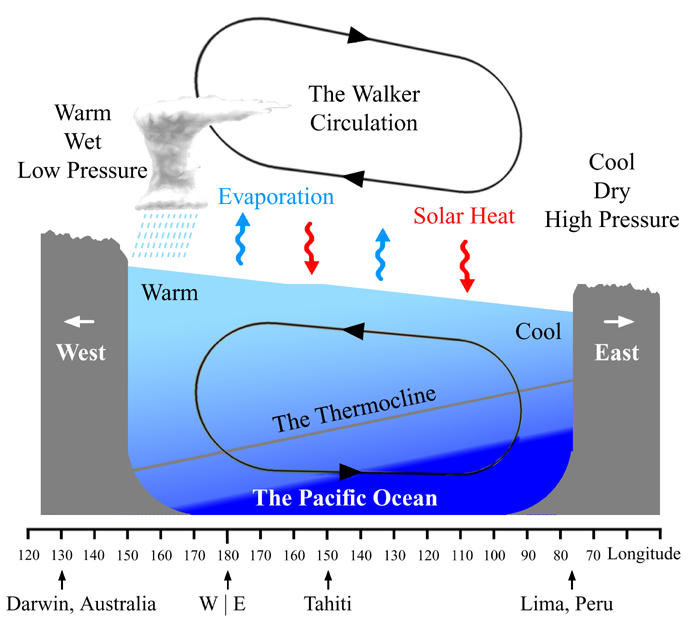
Wang and his colleagues, however, found that over the past 30 years, the summer monsoon circulation, as well as the Hadley and Walker circulations, have all substantially intensified. This intensification has resulted in significantly greater global summer monsoon rainfall in the Northern Hemisphere than predicted from greenhouse-gas-induced warming alone: namely a 9.5% increase, compared to the anthropogenic predicted contribution of 2.6% per degree of global warming.

Most of the recent intensification is attributable to a cooling of the eastern Pacific that began in 1998. This cooling is the result of natural long-term swings in ocean surface temperatures, particularly swings in the Interdecadal Pacific Oscillation or mega-El Niño-Southern Oscillation, which has lately been in a mega-La Niña or cool phase. Another natural climate swing, called the Atlantic Multidecadal Oscillation, also contributes to the intensification of monsoon rainfall.

Other Research finds that Global warming could cause frequent and severe failures of the Indian summer monsoon in the next two centuries, new research suggests.
They found that as we move towards the end of the 21st, and into the 22nd, century, increasing temperatures and a change in strength of the Pacific Walker circulation in spring could cause more frequent and severe changes in monsoon rainfall.

These failures of the monsoon system -- defined in the study as a 40 to 70 per cent reduction in rainfall below normal levels -- were unprecedented in the researchers' observational record, which was taken from the India Meteorological Department and goes back to the 1870s.

from
http://www.sciencedaily.com/releases/2013/03/130320155251.htm
http://www.sciencedaily.com/releases/2012/11/121105200054.htm

Monday, February 18, 2013

Bihar, farmers are growing world record amounts of rice – with no GM, and no herbicide

This was not six or even 10 or 20 tonnes. Kumar, a shy young farmer in Nalanda district of India's poorest state Bihar, had – using only farmyard manure and without any herbicides – grown an astonishing 22.4 tonnes of rice on one hectare (2.5 acres)  of land. This was a world record and with rice the staple food of more than half the world's population of seven billion, big news.

That might have been the end of the story had Sumant's friend Nitish not smashed the world record for growing potatoes six months later. Shortly after Ravindra Kumar, a small farmer from a nearby Bihari village, broke the Indian record for growing wheat. Darveshpura became known as India's "miracle village", Nalanda became famous and teams of scientists, development groups, farmers, civil servants and politicians all descended to discover its secret.

The reason for the "super yields" is entirely down to a method of growing crops called System of Rice (or root) Intensification (SRI). It has dramatically increased yields with wheat, potatoes, sugar cane, yams, tomatoes, garlic, aubergine and many other crops and is being hailed as one of the most significant developments of the past 50 years for the world's 500 million small-scale farmers and the two billion people who depend on them.

Instead of planting three-week-old rice seedlings in clumps of three or four in waterlogged fields, as rice farmers around the world traditionally do, the Darveshpura farmers carefully nurture only half as many seeds, and then transplant the young plants into fields, one by one, when much younger. Additionally, they space them at 25cm intervals in a grid pattern, keep the soil much drier and carefully weed around the plants to allow air to their roots. 

SRI's origins go back to the 1980s in Madagascar where Henri de Laulanie, a French Jesuit priest and agronomist, observed how villagers grew rice in the uplands. He developed the method but it was an American, professor Norman Uphoff, director of the International Institute for Food, Agriculture and Development at Cornell University, who was largely responsible for spreading the word about De Laulanie's work.
Given $15m by an anonymous billionaire to research sustainable development, Uphoff went to Madagascar in 1983 and saw the success of SRI for himself: farmers whose previous yields averaged two tonnes per hectare were harvesting eight tonnes. In 1997 he started to actively promote SRI in Asia, where more than 600 million people are malnourished.

From the Guardian
http://www.guardian.co.uk/global-development/2013/feb/16/india-rice-farmers-revolution#_

Tuesday, January 31, 2012

The Odd: Arecoline to the Influence of Population Pyramids on Revolution

An Odd line of thought, Betel Nut (puwak) to Population Pyramids and Revolution

From the wiki on Arecoline which is found in areca nut (Puwak/Betel Nut)
Arecoline is an alkaloid natural product found in the areca nut, the fruit of the areca palm (Areca catechu). Owing to its muscarinic and nicotinic agonist properties, arecoline has shown improvement in the learning ability of healthy volunteers. Since one of the hallmarks of Alzheimer's disease is a cognitive decline, arecoline was suggested as a treatment to slow down this process and arecoline administered intravenously did indeed show modest verbal and spatial memory improvement in Alzheimer's patients.
Hmm, I did not see that coming. Puwak/Betel Nut and by extension chewing Betel improves learning ability for the healthy and shows modest improvements in verbal and spatial abilities of Alzheimer's patients.

Now the big question is how should the Betel be chewed. Here is a comparison between the Burmese and Papua New Guinea (PNG) ways to chew betel from an gloves off article on Papua New Guinea (PNG)
If you have some time to waste during the day, though, you might try chewing betel. PNG [Papua New Guinea] is the second country I’ve visited where people do that; Burma was the first. Only, Papuans chew it differently. The Burmese dry out the nut, slice it into discs and wrap the discs in a leaf with a slurry of calcium hydroxide (that is, slaked lime that’s been slaked again) and various aromatic seeds and herbs. The lime reacts with the nut and turns it bright red, sort of like the dirt in my old town — seeing betel-cud splattered on a sidewalk always reminds me of Roebourne on a rare, wet, muddy December day — while releasing arecoline, the actual drug behind the betel high.
Papuans can’t be fucked with all that delicate drying and slicing. They get their betel (“buai“) fresh — the fruits look like little green coconuts — and crack open the husk with their side-teeth. (You can see dried husks by the thousands lying across town, like mini grass skirts for a mountain of Hula Barbies.) If the nut inside is white, that means it’s good for chewing; the whiter the better. Red-brown, oxidized-looking nuts are thrown away, replaced by the vendor for no extra charge, since they supposedly smell bad. You pay a kina ($0.50) for a nut, crack it open, chew it, spit out the latexy sap, grab a little loofah-shaped seed pod (the “daka“), bite the tip off, moisten it, dip it in a bag of lime (“kambang“) and try to chew on the nut-pod-lime mixture for as long as possible.
For those who think that that habits like chewing Betel are only in the East/Third World, tobacco chewing is equally disgusting and prevalent in rural America, specially among white Gun toting rednecks.
So now for Population Pyramids and the possibility of revolution in Burma (the thread/link connection was Burmese Betel Chewing habits)
But there’s a snag: popular uprisings really only succeed in countries with large populations of angry young men. Poland in the early 80s. Romania in ’89, Czechoslovakia in ’89, Indonesia in ’98, Egypt in ’11 – look at the population pyramids for those countries, and you’ll see they had an awful lot of 15-25 year olds, right when the shit hit the entrenched-ruling-elite fan.
Same goes for the pro-Western “color revolutions” in the Ukraine, Georgia and Kyrgyzstan: demographic spikes in the 15-19 and 20-25 groups followed by rapid regime change. With revolutions, it’s age that matters. More than geography. Maybe more than ethnicity. Definitely more than fucking Twitter.

In Burma people hit twenty during the last decade, and, sure enough, massive protests suddenly broke out in 2007 after 19 years of relative tranquility. Media sources never failed to mention that the protests were “monk-led,” but no one seems to have caught the significance of that. By Southeast Asian standards, monks are basically college students (especially in Myanmar, where the government was smart enough to close most universities after the ’88 riots).
So, given Sri Lanka's Population Pyramid, where the biggest segment of the population is over 30 its unlikely we will have a LTTE or JVP like uprising which we saw in the last few decades. Can this be said of our neighboring countries, where the majority of the population is still very young and male dominated because of birth selection. Could invasion be a possibility in the next few decades from our immediate neighbors.

Wednesday, April 20, 2011

Land Reform, Big Ag and Social Unrest

My friend Rajaratarala has a blog post on that argues land reforms of the 70's caused economically unfeasible sizes of agricultural property.

My contention is that land reform has brought social stability specially during economic downturns. Yes, sounds idiotic given that we are coming out of a 30 year civil war. But then there were no large landholdings in the North, so no gain from land reform to the poorer section. They were probably expecting jobs, University entrance etc which is an whole other discussion. Whats more applicable was the JVP insurrection which kind of disappeared after the reforms.

The opposite example is the US, where since the 60's small holders have been sold out to Big Ag.
In 1962, a committee of the most powerful corporate executives in the United States issued "An Adaptive Program for Agriculture," a plan to eliminate farmers and farms. Called the Committee for Economic Development, this group represented oil and gas, insurance, investment and retail concerns as well as the food industry. Industry giants such as Campbell Soup, General Foods, Pillsbury and Swift lobbied Congress with the message that the biggest problem in agriculture was too many farmers. The U.S. government encouraged farmers to move off their farms and retrain, allowing their land to be consolidated in the ownership of fewer and fewer corporations.

The Bill
AN ADAPTIVE PROGRAM FOR AGRICULTURE

This has resulted in extreme urbanization even ghettos (Projects e.g. Cabrini Green). These are social powder kegs that would explode in unrest. The two main reasons that have kept the lid on is high employment and welfare programs. There are cynics who also think drugs and alcohol prevent organized unrest. Anyway with decrease in welfare and increasing unemployment expect social unrest where the Watts Riots would look like a picnic.

Some other thoughts of the US and Global Agri systems.
http://www.theoildrum.com/node/6575
Farming itself is the least profitable and least energy intensive segment of the entire economy of agriculture. Of the roughly 2,000 liters of oil required per year to feed each American (Pimentel 459), only one-fifth of that energy is actually used for agriculture, with the rest going toward transport, processing, packaging, marketing, and food preparation and storage (Brown 35). The transformation of farm products into consumer commodities, along with the provision of farm inputs, are the biggest moneymakers in the American food system, and not surprisingly, the sectors dominated by large agrifood corporations. Farmers operating under the capitalist system must sell their products on the open market, which usually means selling to the large transnational corporations that dominate the market.

The example of Cuba shows that it is possible to feed an entire nation with organic agriculture, but it also demonstrates the hardships involved in moving away from fossil fuels. In the first few years after the Soviet Union’s collapse, the average Cuban’s daily caloric intake decreased by 36 percent and protein consumption by 40 percent, while undernourishment increased by 15 percent (Pfeiffer 57). It must be noted that Cuban government policies played a critical role in helping to ensure that the collapse of industrialized agriculture did not turn catastrophic. There has also been a change in attitude towards farming amongst the Cuban people. Cubans now see farming as an important and profitable endeavor and many families have migrated to rural areas to become farmers or have started urban gardens (Pfeiffer 60).

Tuesday, March 9, 2010

Modernized Traditional Paddy Seed Storage bin (“Wee Bissae”)

A really nice Modernized Traditional Paddy Seed Storage bin (“Wee Bissae”) on the way to to Sri Bodhirukaramaya RajaMaha Vihara in Wellewa.

Excerpt from the FAO on Wee Bissae
  • The paddy seeds were stored for next year's crop in closely woven large cane baskets (Wee bissae). Storage bins called ‘Atuwa’ were made of strong hardwood obtained from Jack tree (Artocarpus heterophyllus) for large quantities. In the home of a farmer (Anamaduwa area), an about three meters high traditional seed storage bin (“Bissae”) was kept in the courtyard. It was made of closely woven bamboo, with a protective cover of clay with cowdung (“Goma Meti”), to insulate it against the external temperature and humidity variations and against the growth of various saprophytic fungi and insects. The dried seeds were mixed with Neem (‘Kohamba’) leaves for added protection against harmful insects. A small thatch covered the bin, which was kept on a wooden base, about a meter high. This bin could store 85 bushels (45 bags) of paddy.
  • Such traditional paddy storage bins have almost gone out of use. The paddy is now kept in bags made of waterproof synthetic material, which are usually stored within the home. The paddy bags are also being stored under large tailored waterproof tarpaulin housing.
Please read the FAO article. Lots of info on traditional Sri Lankan Eco friendly Agriculture management