Friday, May 24, 2013

Adulterated Alcohol: Not just in Sri Lanka

TGI Friday., Moscow
Many New Jersey bars were found selling adulterated alcohol in sting named Operation Swill.  In  one bar, a mixture that included rubbing alcohol and caramel coloring was sold as scotch.

These were not run of the mill dilapidated ghetto bars.  They included 13 restaurants of the well known world wide chain  TGI Fridays (Thank God its Friday).  Thats a place where a cocktail averages around USD 9 and beer in NYC branch around USD 8.
As part of Operation Swill, investigators collected 1,000 open bottles of vodka, gin, rum, scotch, whiskey and tequila from the wells of the bars, state Attorney General Jeffrey Chiesa said.
In January and February, investigators went to 63 establishments they suspected were scamming liquor customers. They ordered drinks neat — that is, without ice or mixers — and then covertly took samples for testing.

Of 150 samples collected, 30 were not the brand as which they were being sold.
From  http://www.zerohedge.com/news/2013-05-24/latest-inflation-evasion-scam-bars-serving-caramelized-rubbing-alcohol-instead-scotc

US & UK Travel Warning to Sweden: 5th Day of Rioting:

Who would have thought this would happen in Sweden.  Generous cradle to grave benefits, you name it.   A country with 15% foreign born population. Norway has a little less 14% and having similar immigrant problems

Now schools, police stations and cars are being set on fire, but looting has not been reported. So far the army has not been deployed.

There is a lot of chatter on the Finance forums I read, that expect similar riots to occur in Europe during the summer. Specially, Greece, Spain, Italy where increasing  economic crisis and youth unemployment is over 25% is a tinderbox.  Wonder when they start to throw out the "rights" rule book.  Already this year Sweden implemented  a de facto  racial profiling with project REVA.  What's next.

 Another aspect I find puzzling is that there is very little reporting of the riots in the US and UK.  As of Friday, The NY Times World Section does not have a word on the riots.

Update: Apparently this is not the first time this has happened.
In 2010, up to 100 youths threw bricks, set fires and attacked the local police station in the immigrant-heavy suburb of Rinkeby for two nights. \
And in 2008, hundreds of youths rioted against police in the southern Swedish town of Malmoe, sparked by the closure of an Islamic cultural centre in the suburb of Rosengaard that housed a mosque.
The news from the horses mouth
US & UK Travel Warning to Sweden:  http://www.thelocal.se/48120/20130524/ 
5th Day of Rioting: http://www.thelocal.se/48100/20130524/

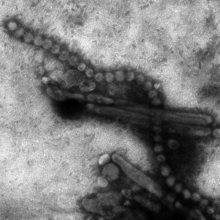
Chinas Bird Flu is Airborne

A follow up to the nCoV post with update on on the Bird Flu in China.  Apparently the H7N9 virus can be also transmitted by airborne exposure.  More disturbing is that it takes a while before symptoms can be seen.  That mean it can be transmitted to many by a infected person who travels or  is in busy crowded places.

A similar virus the H1N1, the Spanish Influenza 1918 of killed more soldiers than the World War I.

More at: http://www.zerohedge.com/news/2013-05-23/chinas-bird-flu-goes-airborne

Wednesday, May 22, 2013

Four days of rioting in Stockholm, Sweden

Apparently sparked by the killing by police a 69 year old armed man.  Sunday night's disturbances according Rami Al-Khamisi a youth organizer said in a statement started as a "reaction to police brutality against citizens, our neighbors"

From one of the comments learned of project REVA where Stockholm police stop people who dont look ethnically Swede (i.e. don't have blond hair) in public transport, and take them for interrogation if they don't have their papers/ID.

Anyway Excerpts from  Financial Times on Riots
Rioting in Stockholm spread to as many as a dozen suburbs in a third consecutive night of unrest that has reopened the debate about how well integrated immigrants are in Sweden.

Cars were set on fire all over the Swedish capital on Tuesday night and early on Wednesday, while in several suburbs police and other emergency services were pelted with stones, Swedish television reported.

“It is very similar to what we have seen in London or Paris but not yet on that scale. But it is a sign of a similar problem; it is a sign of failing integration,” said Per Adman, associate professor at Uppsala University, before the latest unrest.

Experts say that while the Nordic country successfully integrated its immigrants in the 1960s and 1970s it has struggled to do so in the past decade, with many blaming a lack of jobs for low-skilled workers. Youth unemployment was 25.1 per cent in March, above the EU average, even as the overall rate was 8.4 per cent and below the average.
From http://www.ft.com/intl/cms/s/0/9310c7d0-c222-11e2-ab66-00144feab7de.html 
More here: http://www.huffingtonpost.com/2013/05/21/sweden-riots-4-arrested-stockholm-suburb_n_3312512.html

Tuesday, May 21, 2013

Unlikely Allies in Eurozone Trade Wars: Germany and China

One would think that Germany would be the first to support  tough tariffs/duty on Chinese solar panels being imported into the Eurozone. Specially given that Bosch Solar Energy AG and the Siemens Solar unit are dire trouble being unable to compete with cheap Chinese solar panels.

So here is another example of no friends only interests
Companies in the US and Europe complained about these cheap imports, and anti-dumping proceedings were initiated. In Europe, it started last summer. And last week, reports surfaced that the European Commission was ready to act. On June 5th, if no solution materialized, the Commission would slap Chinese-made solar panels, cells, and wafers with punitive import duties of on average 47%.

Last week, the Commission fired another shot, launching an investigation into anti-competitive behavior by Chinese telecom equipment makers Huawei and ZTE, China’s high-tech crown jewels. But the 47% punitive duties on solar panels were the harshest measure yet in the trade war, hitting €21 billion worth of Chinese imports.

On Sunday, it was German Economy Minister Philipp Rösler, who warned of a trade war with China and lambasted the European Commission for its decision to start an anti-dumping procedure against Chinese telecom equipment makers. A “grave mistake,” he called it.

That’s the European dilemma. With many countries mired in recession, and some sinking into depression-like conditions, the Commission wants to protect certain industries. While it can’t protect Spanish companies from German competition, it can protect them from Chinese competition. Given how much German solar-panel makers have suffered under Chinese pressure, and how many billions in subsidies and investments have gone up in smoke, the Commission might have counted on German support.

But for Germany Inc., China is one of the two big economic engines that are still pulling. Exports to the Eurozone, particularly to top trade partner France, have stalled, and the industry is looking to China for growth. Chinese money is also flowing into Germany as Chinese companies are on a shopping spree, paying top euros for 98 firms in 2012, including Putzmeister, a world brand for concrete pumps [article on the aftermath]. Germany Inc. sees in China an escape route from the economic mayhem of the Eurozone; it sees a booming market with over twice the population of the EU. For Germany Inc., China is the future – and Europe a drag. One more treacherous rift across Europe.

From:  http://www.zerohedge.com/contributed/2013-05-21/germany-fires-live-ammo-sino-european-trade-war-brussels

Sri Lanka: still difficult to ‘bell the cat’

In all a reasonable assessment of the situation in Sri Lanka by Dr Alexander (Sandy) Gordon.  Dr Gordon has a PhD from the University of Cambridge. He has worked as an academic and senior public servant. He retired from the Australian National University in 2011, where he was a professor in he College of Asia and the Pacific. He is the author of a number of books on India and the Indian Ocean region.

The Article
Sri Lanka is a small country of about the population of Australia. Its location astride the major energy sea lanes of communication (SLOCS) of the Indian Ocean and just south of behemoth India, however, puts it in a strategic box seat for the forthcoming struggle for influence over the liquid energy requirements of the East Asian economic giants, including China.
Until about a decade ago, the island was a Western-leaning democracy, but one with a generational civil war involving human rights violations on both side. The denouement of the war in May 2009 saw the death of the head of the Tamil Tigers, Vellupillai Prabhakaran. Few who were not Tamil Tiger loyalists would have mourned the passing of the homicidal head of the feared organisation. Fewer still would have regretted the ending of a civil war that had lasted since 1983 and caused an estimated 80,000 deaths.
But the war ended amidst concerns about serious human rights violations involving deaths of civilian Tamils that the Tigers had used as a ‘human shield’ against the final onslaught of the Sri Lankan army. The US and other Western powers sought a pause in the fighting, threatening to withhold a much-needed IMF loan. But President Rajapaksa was able to cock a snook at Washington because of support from China, Iran and Pakistan. China is also involved in developing a massive port at strategically-located Hambantota, on the southern tip of the island. The ability of the Rajapaksa government to withstand Western blandishments signalled an important game-change, in which the West could no longer use its financial clout for human rights objectives.
But the human rights issues won’t go away. Channel Four, which had levelled the initial charges of a civilian massacre, recently published footage that seemed to suggest that the Sri Lankan army had executed Brabharakaran’s twelve year old son. The Financial Times also reports that at least 39 media workers have been killed or disappeared over the last seven years and that Reporters without Borders places Sri Lanka 163 of 179 countries assessed in terms of press freedom.
After the war, the head of the armed forces, General Sareth Fonseka, split from Rajapaksa and fought him in presidential elections. He lost heavily to the popular President, who was riding a wave of economic and military success and who had assumed many of the levers of democratic power. Fonseka was subsequently jailed but has now been released.
Recently Sri Lanka’s Chief Justice was also removed on alleged grounds of impropriety. She had challenged an important law designed to increase the hold of the central government over the provinces and seemingly entrench military rule of the Tamil areas. The new Chief Justice, a former Attorney General, is being boycotted by the Bar Association.
More seriously for the long-term, the government has shunned any peace and reconciliation process or any move toward autonomy for the Tamil minority, arguing that the best way forward is to reintegrate the Tamil majority areas into the Island’s general pattern of strong growth and development.
President Rajapaksa is meanwhile forging ahead to turn Sri Lanka into an ‘Asian tiger’ – a model that is not only being emulated on the economic front but also on the democratic, given the emerging authoritarian overtones. After a sharp fall during the GFC, economic growth, which had typically been in the region of 6% throughout the 2000s, rose to about 8% over 2010-11 (but has fallen to 4.8% in the latest quarter of 2012).
Sri Lanka’s human rights issues and its forthright approach to the Tamils have triggered a range of reactions.
India is struggling to contain China’s growing influence in the Indian Ocean Region and New Delhi’s predilection would be to go soft on human rights. But it is also facing a national election, and the plight of the Tamils has triggered a political response in Tamil Nadu. This has caused India to vote against Sri Lanka on the human rights at the UNHCR.
The West, while its media might continue to seek to expose abuses, can do little, for reasons stated above. Australia’s dilemma is acute. Already in receipt of Tamil boat people fleeing alleged persecution, the last thing Canberra would want is a recrudescence of the guerrilla campaign, which would see rising human rights abuses and larger numbers of asylum seekers. On the other hand, Australia needs the Sri Lankan government’s assistance to ensure that boats do not leave the Island. So here we have it: the old Asian dilemma. How is growth and stability to be set against human rights and fully functioning democratic institutions? How should an ever-weakening West (at least in comparative terms) intervene in what has become the new great game – one in which it is no longer necessarily the central player?
Sri Lanka encapsulates all these issues and provides a fascinating glimpse into an otherwise opaque future.
One of the comments
James Smith - April 7, 2013 “excruciating human rights abuses of Tamils” sounds like an exaggeration given that it has been proven by a number of international agencies that the situation in the north and east of Sri Lanka has stabilised and is peaceful. Sorry, I cannot agree with such a sweeping statement on a number of levels.
It is also the responsibility of the Tamil political parties, as much it is Sinhalese parties, to engage in meaningful dialogue and not lobby for a separate state. Australia will thankfully not endorse any movement that will endanger India’s internal stability, nor endorse a movement that aims to undermine the region’s cohesion. South Asia is not South Sudan. Its important this be understood very clearly.
From http://asiapacific.anu.edu.au/blogs/southasiamasala/2013/02/23/sri-lanka-still-difficult-to-bell-the-cat

Monitoring Annoying Link Comments on Blog

For those of you who maintain a blog an easy way to monitor and delete those innocuous comments
to link back to a product web page being promoted.

First an example from this blog.
In the comment box you can see that that there is a comment
thanks for share<a href="http://ladies.creditbox.o... - Anonymous
The link above goes directly to the comment on this blog.  On first appearance there appears to be no link. But if you hover the mouse over the full stop (.) after the word share the link to the ladies.... site a Chinese website can be seen.

I can delete the comment now that it is visible, but will leave it as an example.

I enabled the comment the gadget/widget for the recent comments by
a) Inserting the Feed gadget/widget
b) Setting feed URL to http://myblog.blogspot.com/feeds/comments/default
c) Couple of other simple configuration
Voila, I can monitor comments easily.

For a more complete step by step description to install recent comments/feed widget see
     http://www.ittwist.com/2013/01/recent-comment-widget-for-blogger.html