Friday, May 23, 2014

Prostitution and Illegal drug sales to be used for GDP in Italy.

Out here in Sri Lanka we think our powers that be are cooking the books to paint a rosy picture of the Economy.  However, we still have a long way to go to catch up with the shenanigans that the West uses to cook the books.

Just a year ago the US added intangibles such as films, books, magazines and iTunes songs to its GDP calculation. That added USD 500 billion (3%) to the US GDP.  This brought down the debt/GDP to just less than 100%.

Then the UK followed by adding to GDP, Research and Development, building of arms, including aircraft carriers.  That increased the GDP by 2.5 - 5%.  Future pension benefits were added as current income and that increased savings rate from 5% to 10%.

Update (30th May 2014) the UK too added prostitution and illegal drugs to the GDP calculation.
Illegal drugs and prostitution boosted the economy by £9.7bn – equal to 0.7% of gross domestic product – in 2009, according to the ONS's first official estimate.

A breakdown of the data shows sex work generated £5.3bn for the economy that year, with another £4.4bn lift from a combination of cannabis, heroin, powder cocaine, crack cocaine, ecstasy and amphetamines.
Netherlands includes its drug trade of about EUR 2.5 billion in its GDP.

Italy just outdid them all by including Drugs, prostitution and smuggling as a part of GDP calculations.

Sri Lanka should follow suit by adding kassipu (moonshine), kudu (drugs) and Prostitution to its GDP.


http://www.zerohedge.com/news/2013-04-21/us-gdp-will-be-revised-higher-500-billion-following-addition-intangibles-economy
http://www.zerohedge.com/news/2014-05-22/hookers-and-blow-how-changing-definition-gdp-officially-jumped-shark

Saturday, May 10, 2014

Elephant Incursion

Coconut Palm leaves broken by Elephant
We (Wilpattu House) had an elephant coming into the property on 8th May 2014.  This was regardless of the Elephant deterrent 6 foot deep ditch around the place.  This smart elephant broke the earth on the ditch to make it less steep and managed to climb over to the property.  Luckily not much harm was done other than breaking two coconut palm leaves.  The watcher/caretaker was awakened and had lit a couple of crackers.  I dont think this Elephant was scared away, he just wishes to avoid confrontation.

This elephant, who nobody has really seen, much less photographed is a really large animal with a footprint of   1.5 feet (457 mm).  I guess old too, older than the New Eluvamkulam town.  New Eluvamkulam town was established in the 90's when the old village moved to the South of the Army and Navy points to avoid LTTE attacks.
The Elephants Foot print 1.5 feet across

This big old elephant probably lives in the replanted jungle of the Holcim Quarry site at Aruwakkadu/Gangewadiya.  New Eluvamkulam, Kala-Oya and Wilpattu are probably his territory. 

See link (in Sinhala thanks Tilak Ranaweera) for plans to fill old quarry pit with garbage from Colombo.

Economics of  Elephant Destruction of Plantations
Compared to Paddy fields, destruction of a coconut, cashew or other plantations by Elephants has long term consequences.  Thats because destruction of a Paddy field affects only that harvest.  In the case of a plantation, the destroyed tree/s will need to be replanted and loss of income until the tree starts yielding.

Earth on Ditch broken to
enable climbing by The Elephant
In the case of a  coconut tree which bears about 15 nuts per pluck every 45 days means a loss of 120 coconuts (=15x12/1.5) a years.  Assuming it takes 7  years for the coconut tree to bear 15 nuts/pluck and a coconut sells at LKR 25, that is a loss of LKR 21,000 (=120x25x7) per coconut tree.

Monday, April 28, 2014

East Coast: How to Cross Kokilai Lagoon

This was meant to be part of a post of travel by tuk-tuk along the East Coast, from Paranthan-Mullativu-Kokilai-Pulmoddai-Trincomalee.  However, there seems to be minimal information about how to get across Kokillai Lagoon. (See Facebook comments for places to stay around Mullativu)

For those who are thinking of traveling by bus/bicycle/motorbike along the East coast of Sri Lanka from Mulativu - Trincomallee - Batticoloa -Arugam Bay, the lagoon at Pulmuddai/Kokilai should not be a deterrent.

Kokilai Lagoon, Kokilai. The other side of the lagoon is Pulmoddai
Just get to the fishing village at either Pulmuddai or Kokilai and arrange with a fisher to take you across. Its about LKR 500 for a person, LKR 1000 or so for a small motor bike and some where in between for a cyclist.  At times there is a boat that can take a tuk-tuk across the lagoon.

If you are traveling in vehicles larger than a tuk-tuk there is detour (42 km ) around the Kokkilai Lagoon.  It should be motorable even by a small car during the dry season.  During the rainy season, as some sections of the road are gravel, small cars might not be able to go over potential mud holes.

For detailed instructions for detour by vehicle see
http://www.wilpattuhouse.com/TravelTips/Crossing-Kokilai-Pulmuddai.html

Monday, April 14, 2014

Landowners to be evicted to make way for Chinese Investment project

Landowners to be evicted  to make way for Chinese Investment project.  No, this not a story from Sri Lanka.  This is from the "land of the free".

In this case it is Senator Harry Reid's (the Senate Majority Leader) son who has been negotiating with Chinese Investors to locate a Solar Energy project on ranch land.  Federal Agents stormed Cliven Bundy's land, began rounding up his cattle, arrested one of his sons and Tasered another, and allegedly shoved his sister—a cancer survivor—to the ground.

As news of the “Old West-style showdown” spread last week, armed militia members and self-proclaimed patriot types began streaming onto the ranch, escalating tensions and stoking fears that the situation might unspool into another Waco or Ruby Ridge.

On Saturday, federal forces retreated and claimed it was for the sake of public safety, although they vowed to pursue their case against Bundy.

It was suggested that their retreat may have been linked to embarrassing revelations that Nevada Senator Harry Reid and his son had been negotiating with Chinese investors to use that part of the desert for a solar-energy project

http://www.reuters.com/article/2012/08/31/us-usa-china-reid-solar-idUSBRE87U06D20120831


http://takimag.com/article/the_vanishing_yokel_jim_goad

Friday, April 4, 2014

Businesses Refuse Spend a Few Cents More Per Garment to End Labor Exploitation in Emerging Markets

Fantastic article by Satyajit Das on how businesses refuse to spend a few cents more per garment to
end labor exploitation. 

The first excerpt is the last sentence in the article and is a quote from George Orwell the author of Animal Farm.
“… we all live by robbing Asiatic coolies, and those of us who are ‘enlightened’ all maintain that those coolies ought to set free; but our standard of living and hence our ‘enlightenment’ demands that robbery shall continue." 

Excerpts:
There is a race to the bottom in costs and working conditions, as emerging market manufacturers compete for the business of foreign purchasers. Everyone in the supply chain seeks to maximise market share and profitability, sometimes by cutting corners. In emerging markets, corruption and failures of government and business compound these pressures.
Bangladesh must compete with Vietnam, Cambodia, Laos and Myanmar for foreign clients. Continuous cost pressures and competition make this economic model difficult to sustain. Prices have decreased by 10-12% over the last 5 years. Return on investment in the garment trade has decreased from 50% to 20%, which is close to the cost of debt in Bangladesh, effectively around 15-20%. In turn, this drives further cost reduction measures.

e.g. If you take a shirt that is sold at US$ 22.50 (appox LKR 3,000) to US consumers, 75% (LKR 2,200) of that price is profit for the retailer. If the shirt is made in Sri Lanka the labour cost is only 2.8% (LKR 81) of the price. Up to the CIF value it is only 23.1% (LKR 675) of the retail price,
None of this is new in emerging markets. Its origins lie in the colonial past.

Using superior military power and technology, European powers, such as England, Spain, Portugal, Netherlands, Italy, France and Germany, established and maintained colonies in Asia, Africa, and the Americas. The basic driver was cheap resources, labour (often in the form of slavery) and new markets for the colonizing nation’s products.

Colonialism fuelled the growth and prosperity of the old world. Portuguese explorer Vasco da Gama was exultant at being able to buy pepper in the East Indies for 3 ducats a hundredweight from indigenous traders knowing they would fetch for 80 ducats in Venice.

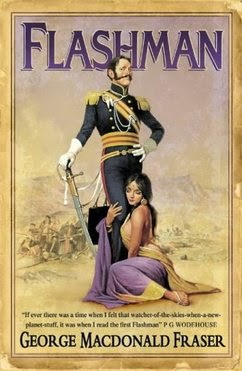
Karl Marx approved: “the question is not whether the English had a right to conquer India, but whether we are to prefer India conquered by the Turk, by the Persian, by the Russian, to India conquered by the Briton”. Whilst recognising that the exploitation of Indian markets and labour by the East India Company for commercial gain, Marx argued that capitalism would transform the subcontinent. India would benefit from the fruits of industrial revolution, such as improved communications and a free press. It was a sentiment worthy of George Macdonald Fraser’s Flashman who regarded the Victorian empire as “the greatest thing that ever happened to an undeserving world”.
Peter Whitfield writing in Travel: A Literary History identified the link between earthly power (wealth) and spiritual glory (Christianity) that provided the justification for colonial conquest:
It amounted to a theory of cultural destiny – that the European maritime nations were destined to bring Christianity and civilization to a pagan and savage world, and their reward was to be the wealth and riches which the indigenous populations themselves were incapable of appreciating and valuing. Underlying colonialism was what Edward Said in 1978 termed: Orientalism. This was a reference to the patronizing attitude of Westerners towards Asian, Middle Eastern and African societies. They were seen as static and under developed, which a superior West could shape in accordance with its own image.

via:
http://www.nakedcapitalism.com/2014/04/satyajit-das-new-colonialism-businesses-refuse-spend-cents-per-garment-end-labor-exploitation-emerging-markets.html

Sunday, March 30, 2014

Chronic Kidney Disease: Cause Hard Water + Heavy Metals + RoundUp

A research article by Jayasumana et al (2014) proposes the cause for Chronic Kidney Disease  of Unknown etiology (CKDu) are chemical complexes formed by Glycphosate (RoundUp) when it combines with  hard water and heavy metals in fertilizer.
I would not rule out dioxins as a another contributory cause to CKDu.


Bullet points from the article.
Prevalence  15% [2] affecting a total population of 400,000 patients with an estimated death toll of around 20,000 
Individuals who drink treated water from large water supply schemes (especially in the twocities of Anuradhapura and Polonnaruwa), while living in the same endemic areas, do not have the disease.
Jaffna and Northern province which has very hard water (Fig 1) has low incidence of CKDu because agro chemicals were prohibited during the war.
Three potential sources of glyphosate/AMPA-metal complexes:


  • [Glyphosate/AMPA + Ca/Mg/Fe/Sr ] complex in drinking water.
  • [Glyphosate/AMPA + Cd/Cr/Ni/Co/Pb/Vanadium (V) or As] complex in food.
  • [Glyphosate/AMPA coming from dermal/ respiratory route] + low amount of [metals/As] from water and foods, here the complex is formed within circulation.
  • I can well attest to the heavy usage of RoundUp out here in the Wanathavillu/Eluvamkulam area.  RoundUp is used to clear paddy fields, vegetable plots, road side, gardens of weeds.  Its much cheaper than using manual labor.  That said as far as I know there arnt any patients suffering from CKDu.  Probably attributable to drinking water wells are by the side of tanks/wewas like Ralmadu and Nelum Wewa or are diluted by Kala Oya waters.  All other wells the water is absolutely hard and undrinkable.

    Update:
    Research shows that Roundup (glyphosate) and its principal breakdown product, Aminomethylphosponic acid (AMPA) is taken up and accumulated in GM soy bean.
    All of the individual samples of GM-soy contained residues of both glyphosate and AMPA, on average 9.0 mg/kg. This amount is greater than is typical for many vitamins. In contrast, no sample from the conventional or the organic soybeans showed residues of these chemicals .

    Full Article
    Jayasumana, C.; Gunatilake, S.; Senanayake, P. Glyphosate, Hard Water and Nephrotoxic Metals: Are They the Culprits Behind the Epidemic of Chronic Kidney Disease of Unknown Etiology in Sri Lanka? Int. J. Environ. Res. Public Health 2014, 11, 2125-2147.

    via:
    http://www.nakedcapitalism.com/2014/03/links-3314.html

    Sunday, March 9, 2014

    UK Morals: No sanctions because of Russian Money in London.

    Many here in Sri Lanka happen to think that the West is more moral and less corrupt than Sri Lanka.  Yes, they appear to be moralistic with us poor folk in Asia and Africa. Thats because the money involved is peanuts and we are/were dependent on handouts.  No different from the upper class in Sri Lanka who used to screw the female help and throw them out when they became pregnant.  I am sure everyone knows of such family secrets. On the other hand the same upper class would deplore the "loose morals" of the poor.

    Now we find that Germany and the UK are not willing to sanction Russia on its invasion into Crimea, because it will hurt their monetary interests.

    Excerpts
    one country that has the most to lose from Russian sanctions, Germany, and specifically its industrial superlobby has already said "Nein" to any truly crippling trade blockade of Moscow would backfire on Germany's own economy and bottom line.
    The White House has imposed visa restrictions on some Russian officials, and President Obama has issued an executive order enabling further sanctions. But Britain has already undermined any unified action by putting profit first.
    It boils down to this: Britain is ready to betray the United States to protect the City of London’s hold on dirty Russian money. And forget about Ukraine.
    Britain, open for business, no longer has a “mission.” Any moralizing remnant of the British Empire is gone; it has turned back to the pirate England of Sir Walter Raleigh. Britain’s ruling class has decayed to the point where its first priority is protecting its cut of Russian money — even as Russian armored personnel carriers rumble around the streets of Sevastopol. But the establishment understands that, in the 21st century, what matters are banks, not tanks.

    The Russians also understand this. They know that London is a center of Russian corruption, that their loot plunges into Britain’s empire of tax havens — from Gibraltar to Jersey, from the Cayman Islands to the British Virgin Islands — on which the sun never sets.

    British residency is up for sale. “Investor visas” can be purchased, starting at £1 million ($1.6 million). London lawyers in the Commercial Court now get 60 percent of their work from Russian and Eastern European clients. More than 50 Russia-based companies swell the trade at London’s Stock Exchange. The planning regulations have been scrapped, and along the Thames, up go spires of steel and glass for the hedge-funding class.

    Britain’s bright young things now become consultants, art dealers, private banker and hedge funders. Or, to put it another way, the oligarchs’ valets.

    Russia’s president, Vladimir V. Putin, gets it: you pay them, you own them. Mr. Putin was absolutely certain that Britain’s managers — shuttling through the revolving door between cabinet posts and financial boards — would never give up their fees and commissions from the oligarchs’ billions. He was right.

    The Shard encapsulates the new hierarchy of the city. On the top floors, “ultra high net worth individuals” entertain escorts in luxury apartments. By day, on floors below, investment bankers trade incomprehensible derivatives.

    Come nightfall, the elevators are full of African cleaners, paid next to nothing and treated as nonexistent. The acres of glass windows are scrubbed by Polish laborers, who sleep four to a room in bedsit slums. And near the Shard are the immigrants from Lithuania and Romania, who broke their backs on construction sites, but are now destitute and whiling away their hours along the banks of the Thames.

    The Shard is London, a symbol of a city where oligarchs are celebrated and migrants are exploited but that pretends to be a multicultural utopia. Here, in their capital city, the English are no longer calling the shots. They are hirelings.

    From:
    http://www.zerohedge.com/news/2014-03-09/why-london-too-will-balk-sanctions-against-russia-and-putin-knows-it

    http://www.nytimes.com/2014/03/08/opinion/londons-laundry-business.html?_r=2 

    Also Read
    http://www.nakedcapitalism.com/2014/03/yanis-varoufakis-ukraine-three-awkward-questions-western-liberals-comment-eus-role.html 

    Addendum
    A comment: Well, I do not believe that a few thugs will produce a grassroots uprising but that there is a real dissatisfaction in the population towards the corruption of the government. It represents a worldwide trend that questions increasingly the decision makers who are not really responsible (immunity) but ensure a comfortable lifestyle for themselves while the rest of the people are increasingly struggling. We see corruption left and right and the increasing concentration of power has to reverse so that decisions are again made on the lowest possible level of the hierarchy.

    Contrary to the commenter,  I think the last 50 years or so of history was an aberration, where the poulace had a say in the politics of their country.   The oligarchs and industrialists initially did not know how to respond and keep control of the general populace.   Now oligarchs and industrialist Worldwide have figured out mechanisms to grab control into their hands.  Using laws and loopholes in laws which they "sell" to the general population as in for their own good power is consolidated in a few as in most of history.